

Facts trump first
Harry berates journalsist who focussed on bring first as opposed to right about Hearts players being assaulted

There was a time when the news was boring. Not bad. Not dishonest…Just boring.
A news bulletin used to consist of a serious-looking presenter telling you what had happened that day - This happened, then that happened, then this happened. No hysterics. No “breaking news” banners every six minutes. No vox pops from a bloke three pints deep in a Wetherspoons in Stoke giving his thoughts on fiscal policy.
The BBC News at Nine and the ITV News at Ten delivered the facts, usually through journalists who had spent years learning their craft. Then the programme ended, the national anthem played, and everyone went to bed. Somewhere along the line, though, news stopped being a public service and became entertainment.
The arrival of 24-hour rolling news changed everything. Suddenly, news wasn’t just something to report; it became content that needed to compete for viewers. Then came websites, social media, YouTube, TikTok, Facebook and Twitter/X. Newspapers became “content providers”. Journalists became brands. Every story became a race. And in that race, being first became more important than being right.
There’s a brilliant interview with Denzel Washington where he criticises modern media for exactly this. The obsession with immediacy. The desperation for clicks, retweets, shares and viral moments. He argues that accuracy has become secondary to speed. Saturday at Celtic Park was a perfect example.
By the time I got back to my car after Celtic’s title-winning victory over Hearts, the narrative had already been written. Radio Scotland had moved into sombre mode. Social media was awash with claims that Hearts players had been assaulted, bloodied, forced to flee for their safety. The facts? They appeared to matter less than the hysteria.
Now let’s be clear: supporters should not be on the pitch. They simply shouldn’t. The booing from the overwhelming majority of Celtic supporters made that perfectly obvious. Most fans inside Celtic Park wanted nothing to detract from the title celebrations. We wanted the players to enjoy the moment. We wanted no alternative narrative.
But the reality of what happened and the version immediately pushed online were two very different things.
From where I sat in the North Stand, what I mostly saw were idiots with phones. Narcissists chasing social media moments. People trying to get selfies, videos and their own fifteen seconds of online fame. Frankly, seeing children of five or six years old being dragged onto the park by parents desperate for “content” was embarrassing. These people weren’t motivated by passion for Celtic. They were motivated by passion for themselves.
Were there some idiots who ran towards Hearts players and goaded them? Yes. Absolutely. But assaulted? No.
One video posted online shows a supporter having his phone knocked out of his hand by Lawrence Shankland after invading the pitch and getting in his face. Astonishingly, some people have attempted to blame Shankland for that. Nonsense. If somebody illegally enters your workspace and sticks a phone in your face, you are entitled to react. The person at fault was the clown on the pitch.
Yet within minutes the narrative was fixed: Celtic fans had attacked Hearts players.
Sky had around 25 cameras at the game. Thousands of supporters had phones out filming everything. Days later, not a single image has emerged of a Hearts player being assaulted. Not one. And yet the “fact” has already been established in much of the coverage. That is the danger of modern journalism.
Many reporters covered themselves with the coward’s disclaimer: “it is being reported that…”
What a magnificent get-out clause.
You don’t verify. You don’t check. You don’t confirm with multiple sources. You simply repeat rumours while insulating yourself from accountability. “I’m not saying it happened,” they can protest afterwards. “I’m merely reporting that others were saying it happened.”
Come off it.
That phrase has become journalism’s equivalent of laundering gossip into accepted truth. And once the story is out there, the correction never catches up with the original claim. The emotional reaction has already landed. The social media engagement has already been banked. The damage is done.
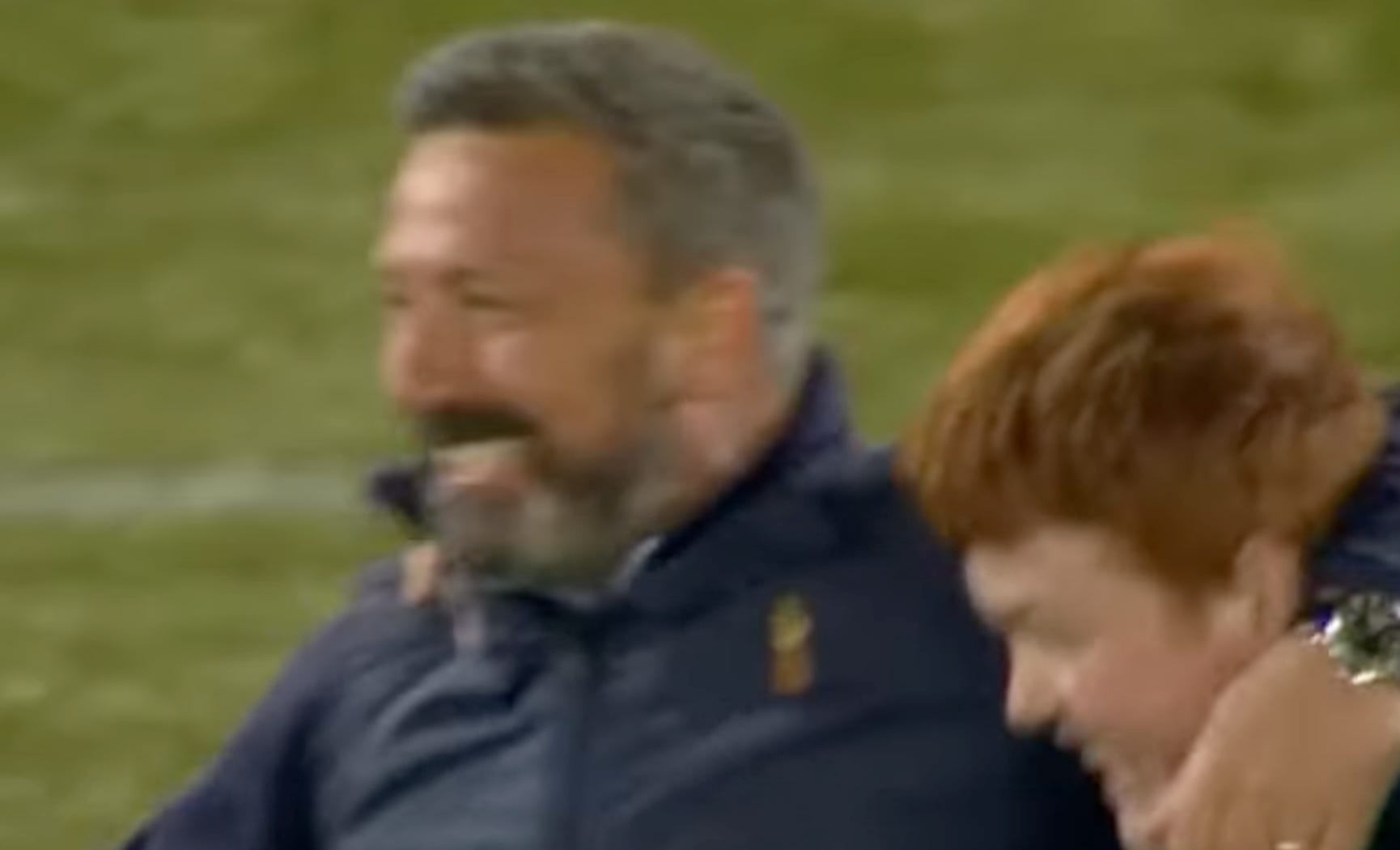
The irony is that pitch invasions are hardly unique to Celtic. We’ve seen them across Britain for decades. Back in 2022, Kilmarnock fans flooded the park hugging McInnes whilst arbroath players were still around following a last minute winner that secured promotion back into the Premiership. English football sees invasions regularly despite it being a criminal offence there.
None of that excuses it. Fans should stay off the pitch. Players have every right to have concerns about their safety when supporters invade the field. But journalism has a responsibility too.
It is supposed to be about truth. About verification. About context. About getting the story right. Instead, too much modern reporting is about being quickest to the keyboard.
And perhaps the most revealing part of all is who has driven this particular narrative hardest. It hasn’t primarily been Hearts supporters or Hearts journalists. Much of the outrage has come from another corner of Glasgow - from people connected to a club that has spent vast sums, collapsed spectacularly and finished third in what was supposed to be a two-horse race.
Celtic won the league over 38 games because they earned the most points.
No amount of clickbait outrage changes that.
Prompt and factual should always trump first and wrong.
